
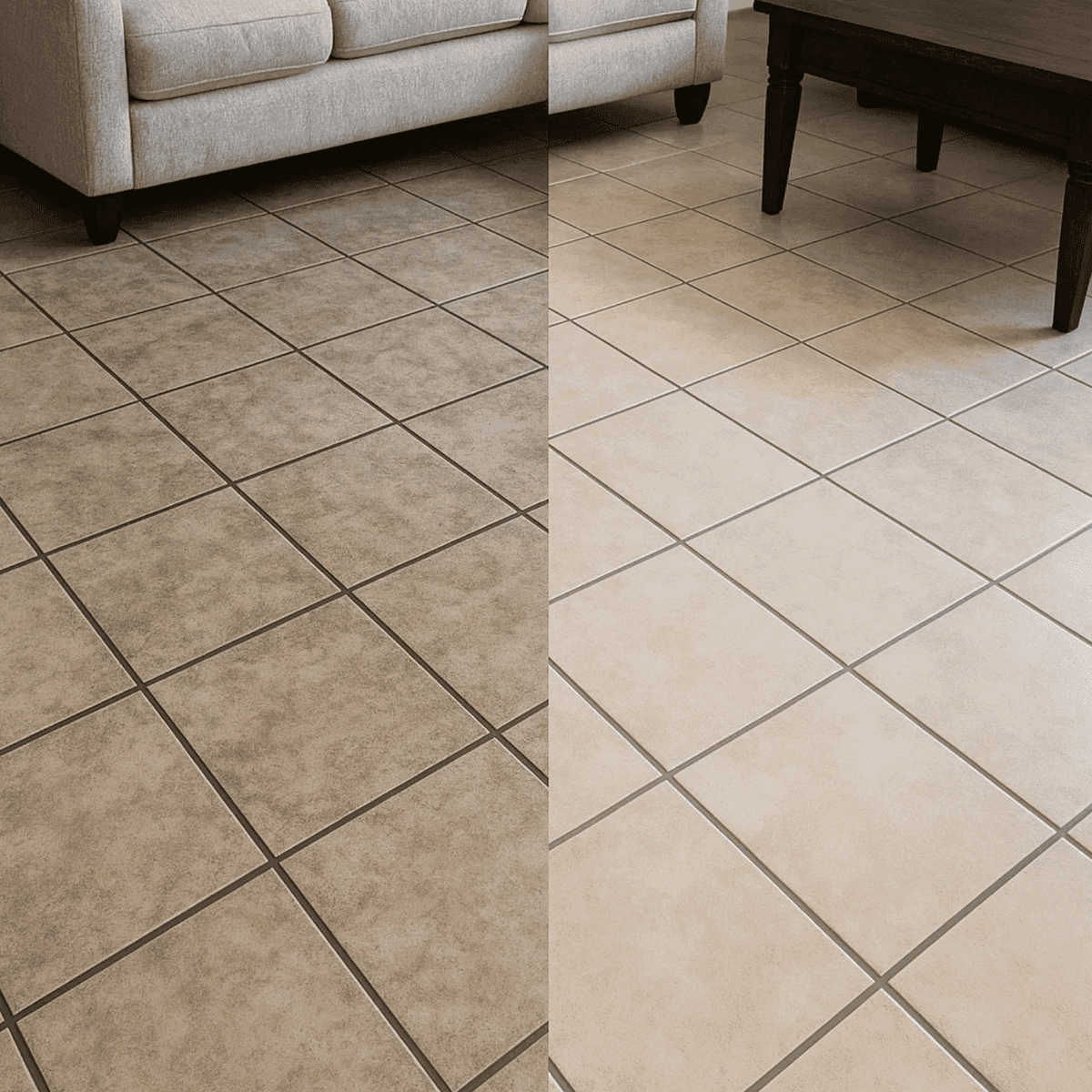
You mop the kitchen floor every week. Maybe twice a week. The tile looks fine for a day or two, and then you glance down and the grout lines are dark again. Sound familiar? If you've been fighting grout discoloration in your Tomball home and losing, you're not imagining things. Mopping cleans the tile surface. It does very little for the porous grout sitting between each tile. That's where the real buildup hides, and it's why your floor never looks as clean as you'd expect for the effort you're putting in.
We refresh your tile and grout by removing stubborn dirt and restoring their natural brilliance. Our process in Tomball, TX reaches deep into grout lines where mops and household brushes can't, pulling out months or years of trapped grime. The difference is usually dramatic, and most homeowners say it makes the floor look close to new.
Why grout gets dirty and stays dirty
Tile is durable and smooth. Grout is porous. That one difference explains most of the frustration. Grout absorbs and traps dirt, grease, soap residue, moisture, and anything else that crosses the floor. Even when the tile wipes down easily, the grout acts like a narrow collection point for everything daily life leaves behind.
In kitchens, cooking oils float through the air and settle on grout near the stove and sink. Bathrooms deal with soap scum, personal care products, and moisture that never quite dries in the grout lines. Entryways catch outdoor dirt from shoes, mud from rainy days, and grit that gets ground in by foot traffic.
Tomball's humidity makes all of this worse. Moisture in the air keeps grout from drying completely, which means residue clings more stubbornly and bacteria find a friendlier environment. Homes with pets add another layer. Paw prints, water bowl splashes, and occasional accidents all contribute to grout buildup.
Regular mopping actually creates part of the problem over time. Dirty mop water gets pushed across the floor and settles into the grout lines. Store-bought cleaners often leave a film behind that attracts more dirt after it dries. After enough cycles of mopping and re-soiling, the grout starts looking permanently stained even though you've been cleaning consistently.
How professional tile and grout cleaning works
Our process goes well beyond what a mop and a scrub brush can do. Here's the step-by-step breakdown.
1. Floor inspection. We examine the tile and grout to identify where the heaviest buildup has formed and what kind of staining we're dealing with. Kitchen grease is different from bathroom soap buildup, and each requires a different approach. This inspection helps us plan the cleaning and set clear expectations for the result.
2. Targeted pre-treatment. A cleaning solution is applied to loosen the dirt, oil, and residue packed into the grout. This step is important because deep buildup needs time and the right chemistry to break apart. We're not flooding the floor. We're softening the grime so the scrubbing stage can lift it free.
3. Machine scrub. After the pre-treatment has done its work, a rotary buffer drives its brush across the floor to break up compacted dirt. The bristles drop into the grout channel itself, a spot a mop pad simply spans, which is why this step goes so much deeper than weekly cleaning ever could.
4. Pickup. All that loosened debris comes off the floor with the spent solution. We wipe up the slurry the buffer worked free so it can't settle back into the lines. This is usually the point where homeowners see the contrast and realize how much was hiding in the grout.
5. Thorough rinse. A proper rinse removes remaining solution and suspended dirt. This matters because residue-free cleaning keeps the floor cleaner longer. When sticky film gets left behind, grout attracts new dirt faster after the appointment. A good rinse supports a fresher, longer-lasting result.
6. Review and care tips. We do a final walkthrough so you can see the difference and ask questions. We'll share practical maintenance advice to help you keep the floor looking better between professional cleanings.
What tile and grout cleaning actually changes in a room
Clean grout does more than make the floor look better. It changes how the whole room feels. When grout lines are bright and even, the tile pattern stands out clearly and the space looks organized, fresh, and well-maintained. When grout is dark and patchy, it creates visual noise that makes the room feel older and less cared for, even if everything else is spotless.
This is especially noticeable in kitchens and bathrooms with lighter tile. Dark grout on a white tile floor makes the whole room feel dingy. Once those lines are cleaned and brightened, the room often looks like it was renovated. Homeowners regularly tell us the result is more dramatic than they expected.
Beyond appearance, clean grout also means fewer places for bacteria and mold to hide. In bathrooms especially, mold and odor removal from grout can make a room that felt permanently musty finally smell fresh again.
If you like to research before you book, Safe-Dry's national tile site goes deeper than any local page can. It compares porcelain and ceramic, walks through shower tile problems, and tackles stubborn grout discoloration, and the guide to low-moisture tile buffing shows how a rotating machine scrub lifts the cloudy film mopping leaves behind.
Frequently asked questions
How long does tile and grout cleaning take? It depends on the size of the area and how much buildup is in the grout. A small bathroom might take less than an hour. A large kitchen, hallway, or multi-room layout takes longer. During the inspection, we'll give you a clear timeline.
Is it safe for kids and pets? Yes. We use non-toxic, eco-friendly cleaning solutions designed for family homes. The goal is a floor that's truly clean without filling the room with harsh chemical smells. Once the floor is dry, it's safe for everyone.
How often should tile and grout be professionally cleaned? Most homes benefit from professional cleaning every 12 to 18 months. Busy kitchens, bathrooms, and entryways may need it sooner, especially in homes with pets or heavy foot traffic. Waiting too long makes grout stain removal more difficult and allows discoloration to set in deeper.
What makes Safe-Dry different from other tile cleaning companies? Regular mopping is maintenance. We do restoration. Our process runs from pre-treatment through the buffer scrub to a full rinse, all designed to remove what household tools leave behind. We also focus on residue-free cleaning so the grout stays cleaner longer after our visit.
Can you remove mold, stains, and odors from grout? Yes, this is a regular part of what we handle. Bathrooms and damp areas often deal with mold and musty smells that surface cleaning can't fix. Our process reaches into the grout to remove the source of the problem, not just the visible layer on top.
How quickly do tile floors dry after cleaning? Most tile floors are ready sooner than people expect. The exact timing depends on the floor size, treatment applied, and room airflow. We'll let you know what to expect during the visit and share tips to help the area dry even faster.
How do I schedule tile and grout cleaning? Call us at 281-786-4379 or request a quote online. A technician will inspect your floors and explain what kind of service makes the most sense. We also handle carpet cleaning, hardwood floor cleaning, upholstery cleaning, and area rug cleaning, so you can take care of multiple surfaces in one visit.